El Cielo Starfish Sanctuary & Palancar Reef Snorkel Tours
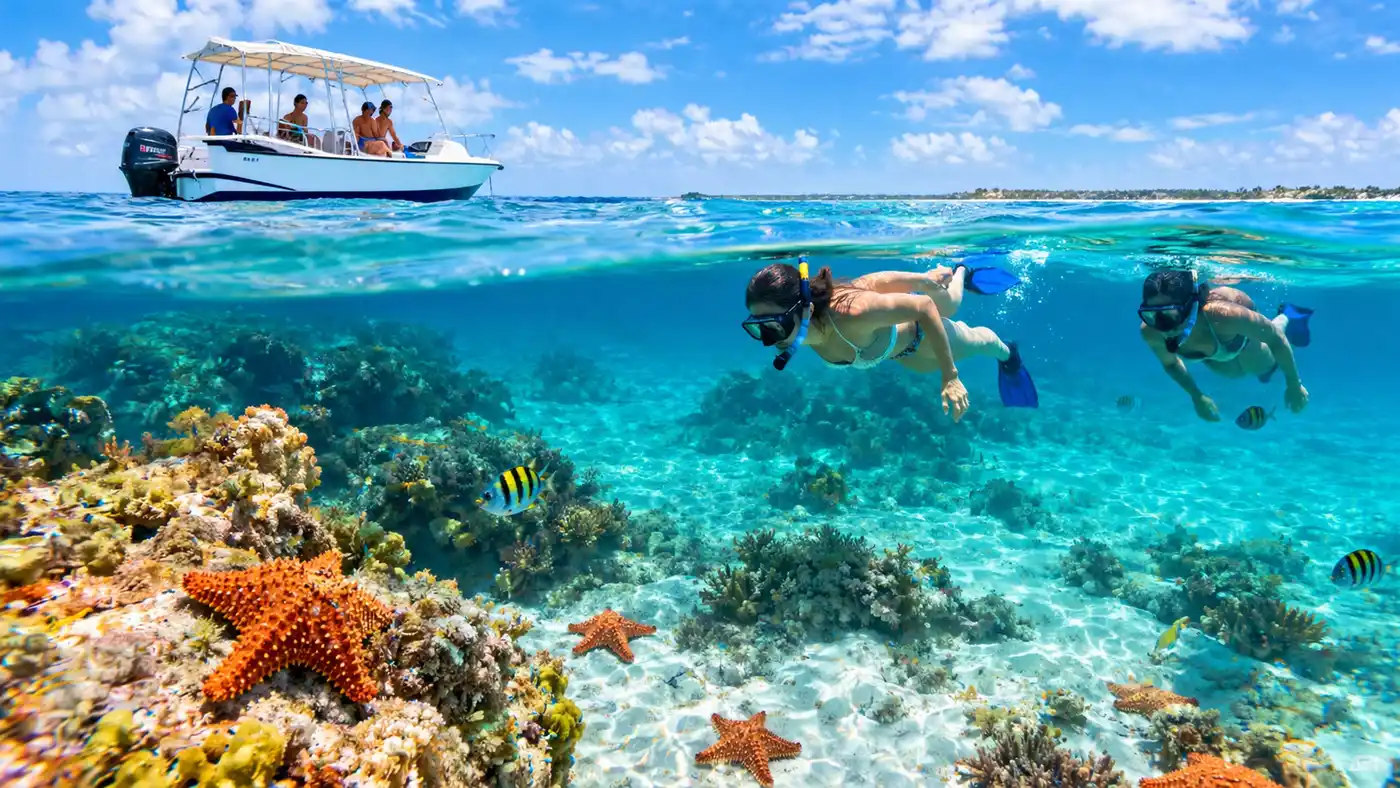
The boat ride south from San Miguel takes about 42 minutes if the afternoon chop hasn't picked up yet, skirting past the ironshore limestone coast until the deep cobalt water suddenly blooms into electric turquoise. Booking a starfish sanctuary & palancar reef snorkel outing is easily the most popular water trip on Cozumel, and for good reason. You get two completely different worlds within a single four-hour morning: towering, shadow-filled coral pinnacles rising from 40 feet of water, followed by a silent, white-sand sandbar where dozens of giant cushion sea stars sit motionless across the seabed.
Most travelers hear about El Cielo long before they set foot on the island. Still, a lot of people arrive with strange expectations, thinking they can walk straight into the starfish sanctuary from a beach resort or rent a scooter to get there. It does not work that way. The southern shelf of Cozumel is protected, wild, and only accessible by boat. Whether you come off a cruise ship for six hours or spend two weeks in an apartment in town, sorting out how to get to these reefs without ending up on a cattle-maran with 50 strangers takes a little bit of planning.
Book your palancar reef experience:
What to Expect on a Starfish Sanctuary & Palancar Reef Snorkel Outing
A standard boat route moves south down the leeward side of Cozumel to clear the entrance of the Arrecifes de Cozumel National Marine Park. A complete guide to snorkeling Palancar Reef will tell you that this section of the Mesoamerican barrier reef system is defined by massive current-swept structures. You will jump in with your guide leading a drift snorkel. The boat simply drops you off, follows your guide's surface marker buoy downstream, and picks you up 35 minutes later.
The visual shift between stops is wild. At Palancar, you look down into canyons and tunnels framed by brain corals, purple gorgonians, and massive sheet coral formations. Schools of blue tang rush between crevices, and you will almost certainly spot a hawksbill turtle grazing on sponges. The water feels immense and slightly ominous because the bottom drops off into the deep blue abyss right along the shelf edge.
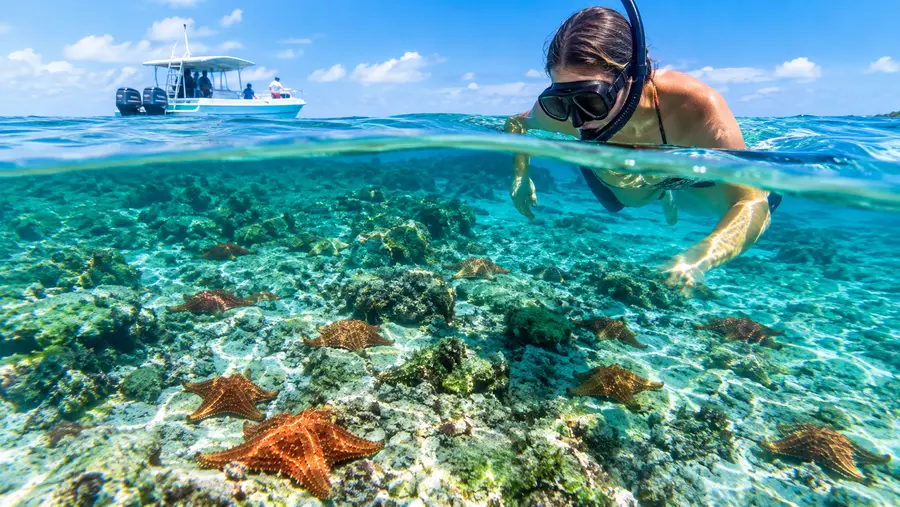
After Palancar, good captains head slightly north toward the Colombia shallows before sliding into the protected sand flats. This classic Cozumel snorkeling tour Palancar Columbia and El Cielo reefs circuit gives you the ideal progression of water depths. By the time the twin outboards throttle back at El Cielo, the water is only four to eight feet deep and crystal clear. It looks like swimming inside a swimming pool filled with raw diamond dust.
Pro tip: Ask your boat captain to visit El Cielo first if you take an early morning private charter. Most group tours hit Palancar first and reach the starfish sandbar around 11:30 am, so running the route in reverse lets you have the shallow flats entirely to yourself.
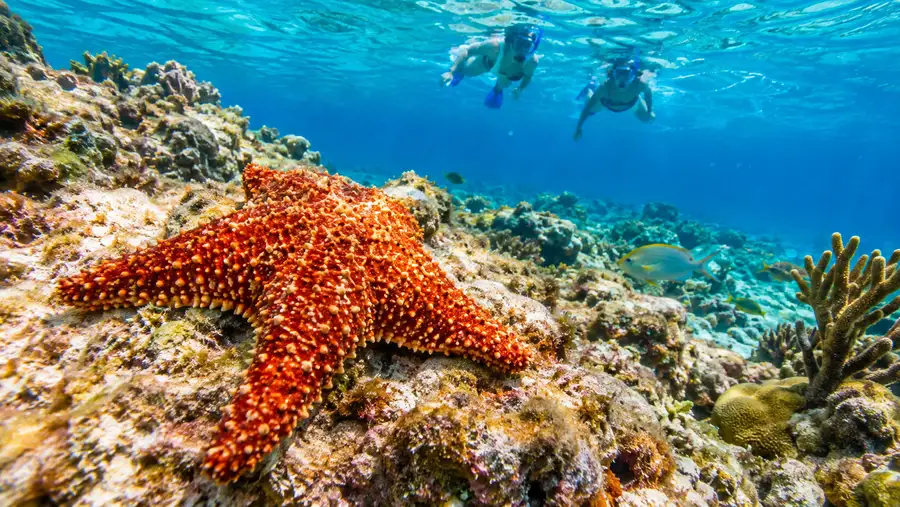
The sea stars live scattered across the pale sand, spaced several yards apart. These are cushion sea stars (Oreaster reticulatus), heavy, knobby creatures that range from bright orange to dull olive green. Floating over them with zero current pushing you around feels surreal. You do not need to kick hard; you just drift flat on the surface and watch them quietly graze on microorganisms trapped in the sediment.
Navigating the Stops: Palancar Reef to Playa El Cielo
There is persistent confusion about the difference between Playa El Cielo Palancar Reef areas and the sandbar itself. El Cielo is not an accessible mainland beach club. The name refers to the shallow offshore bay on the southwestern tip of the island. Next to it sits El Cielito, an even shallower sandbar where the water barely reaches your waist. Most operators combine both spots into the itinerary, finishing the swim time at El Cielito so guests can stand up, drink a cold beer, and eat fresh fruit or ceviche while waist-deep in the Caribbean.
Southern stingrays have figured out this routine. Within minutes of a boat dropping anchor at El Cielito, three or four large stingrays will glide right past your knees. They are looking for scraps of fish left behind from ceviche prep. They are not aggressive, but their wings feel like wet velvet if they accidentally brush against your shins, which usually makes at least one person scream before laughing. Keep your feet planted flat on the sand and shuffle rather than stepping down blindly.
Marine park rangers patrol these shallow waters constantly. They check boat permits, monitor wristband compliance, and make sure nobody steps off the boats in areas designated for starfish recovery. If an engine leaks oil or an anchor drags across seagrass beds, the park service pulls the operator's license. That strict management keeps the location looking pristine despite hosting hundreds of visitors every single day.
Weather dictates how this trip feels. On days with a strong southern wind or an approaching winter norther, the drift over Palancar can get choppy enough to make weak swimmers seasick. Inside the sandbar at El Cielo, though, the shallow water usually stays remarkably calm because the island's southern curve absorbs most of the open ocean surge.
Cruise Excursions vs. Local Charters for Starfish Sanctuary & Palancar Reef Snorkel Tours
If you arrive on a ship, you face an immediate choice between booking through your cruise line or finding a local captain independently. The Royal Caribbean starfish sanctuary & palancar reef snorkel package is widely booked, reliable, and guarantees the ship won't leave without you. But it also means sharing a large double-decker catamaran with 40 to 65 shipmates, which changes the dynamic completely.
A quick look through independent starfish sanctuary & palancar reef snorkel reviews reveals a consistent theme: travelers on private or small-group boats have an entirely different experience than those on massive ship-sponsored charters. Big group boats herd people into the water on a rigid buddy system with flotation vests fully inflated, keeping everyone grouped tightly together like ducklings. You spend a lot of time getting kicked in the mask by stray fins.
Local operators running six-passenger to ten-passenger pangas depart from Marina Fonatur or the downtown pier. They move faster, reach the reefs before the catamarans arrive, and allow you to stay in the water until you are actually tired rather than calling you back on a whistle after 22 minutes. If you have at least five hours in port, walking past the cruise terminal gates and taking a short $10 taxi to Marina Fonatur to meet a pre-booked local guide is simple and far more personal.
| Tour Style | Group Size | Average Cost | Snorkel Time | Atmosphere |
|---|---|---|---|---|
| Cruise Ship Excursion | 35 to 65 guests | $95 - $130 | 25 mins per stop | Structured, crowded, family-oriented |
| Shared Local Panga | 8 to 14 guests | $50 - $75 | 35 to 45 mins per stop | Relaxed, local crew, great value |
| Private Boat Charter | Up to 6 guests | $320 - $480 total | Completely flexible | Custom timing, peaceful, premium drinks |
Cost differences matter, especially for families. A private panga for four people often ends up cheaper per head than four tickets purchased through a ship desk, and you get to pick your own music, linger over lunch, and skip the stops that feel too crowded.
Book your palancar reef experience:
Practical Details: Packing, Reef Rules, and Conservation
The Arrecifes de Cozumel National Marine Park operates under federal protection, which means the rules here are significantly tighter than on the mainland around Cancun or Playa del Carmen. You can read up on the current seasonal closures and park rules to see which reef sections might be resting during your travel dates, but the baseline rules for snorkelers stay the same year-round.
Starfish are remarkably fragile. Lifting a sea star out of the water traps air bubbles inside its water vascular system, which can kill the animal in minutes. Even touching them with sunscreen-covered hands transfers toxic oils onto their porous skin. Tour guides will shout at you if you dive down to touch them, and they are right to do so. Observe them from the surface, use a zoom lens on your underwater camera, and let them be.
Note: Chemical sunscreens, even those labeled reef-safe, are banned throughout the Cozumel marine park. Rangers expect visitors to wear long-sleeve rash guards instead of slathering on lotions before jumping into the water.
Packing for this boat run requires a few specific items to avoid burning to a crisp under the Caribbean glare:
- Sun protection: pack a UPF 50+ long-sleeve rash guard and a wide-brim hat that won't blow away when the boat hits cruising speed.
- Dry storage: bring a small 10-liter dry bag for your phone, wallet, and towel, since open pangas get wet floorboards during choppy crossings.
- Cash reserve: carry roughly 300 to 500 Mexican pesos per person to cover marina park fee bracelets, taxi fares, and crew gratuities.
- Motion sickness remedy: take meclizine about 45 minutes before departure if you are prone to nausea, as the drift over Palancar rolls heavily.
Bring your own silicone mask if you have one that fits your face well. Tour boats provide rental masks and snorkels, but they are often worn down from heavy use, and a leaking mask will ruin a gorgeous drift over Palancar faster than anything else.
Booking Tips and Making the Most of Cozumel Starfish Sanctuary & Palancar Reef Snorkel Trips
Booking the right excursion comes down to timing your day to dodge the heaviest boat traffic. Most large operators run two shifts: morning departures between 8:30 am and 9:30 am, and afternoon runs leaving around 1:00 pm. The morning trip is almost always superior because winds are lighter, visibility reaches its peak, and the stingrays at El Cielito are more active.
Weather cancellations happen. If a northern front blows into Quintana Roo, the port captain in San Miguel closes the harbor to small watercraft. Cruise passengers often get stuck without alternatives, but if you are staying on the island, a good captain will happily reschedule your trip for two days later once the swell subsides.
- Check departure points: confirm whether your boat departs from downtown pier or Marina Fonatur to avoid expensive last-minute taxi rides.
- Confirm snack inclusions: ask upfront whether the operator supplies water, sodas, and freshly made ceviche or just pre-packaged potato chips.
- Ask about life jackets: choose operators that supply waist-belt flotation devices rather than bulky orange neck vests if you want freedom to swim smoothly.
- Verify marine park fees: clarify whether the mandatory CONANP park bracelet (roughly $5.50 USD) is included in your booking price.
After your boat docks back at the marina, don't rush straight back to your hotel room. The open-air restaurants right outside Marina Fonatur serve cold Bohemia beer and whole fried snapper at local prices, giving you a chance to shake the sea salt out of your hair before dealing with downtown traffic.
Frequently Asked Questions about starfish sanctuary & palancar reef snorkel
Can you touch the starfish at El Cielo?
No, touching the cushion sea stars is strictly prohibited by federal marine park law. Sea stars absorb oxygen through delicate skin structures that are easily poisoned by human oils and sunscreen, and lifting them out of the water can kill them.
How deep is the water at Palancar Reef and El Cielo?
Palancar Reef features coral formations ranging from 25 to 80 feet deep, requiring surface drift swimming. In contrast, El Cielo is an extremely shallow sandbar where water depths generally sit between four and eight feet, with El Cielito dropping down to waist-deep water.
Do I need to be a strong swimmer for this tour?
Basic comfort in the water is helpful, but non-swimmers manage fine with the provided life jackets and floating rings held by the tour guides. The drift current carries you along Palancar without requiring heavy kicking, and the sandbars are calm and shallow.
Quick Reference
- Location: Southwest coast of Cozumel
- Typical tour duration: 4 to 5 hours
- Starfish depth: 4 to 8 feet of sand flat
- Sunscreen rule: Strictly rash guards only
Book your palancar reef experience:
The Bottom Line
Floating over the giant sea stars at El Cielo after navigating the deep blue drop-offs of Palancar Reef is an experience that stays with you long after the sunburn fades. Avoid the massive 60-passenger party boats, hire a local panga captain who respects the marine park boundaries, and get on the water early in the day. It remains one of the absolute best aquatic adventures anywhere in Mexico.
Read more about palancar reef.